The Agile Manifesto: A Guide to Agile Principles and Practices
Agile is one of the most talked-about methodologies in the business world, but understanding its origins and principles can feel overwhelming. At its core, The Agile Manifesto provides a set of values and principles that help organisations deliver better results by embracing adaptability and collaboration.
Whether you’re a business leader, a project manager, or a startup founder, knowing how Agile can transform your team is crucial. This post will unpack the essence of The Agile Manifesto, explain its importance, and provide practical insights into how it can drive success in your organisation.
What Is The Agile Manifesto?
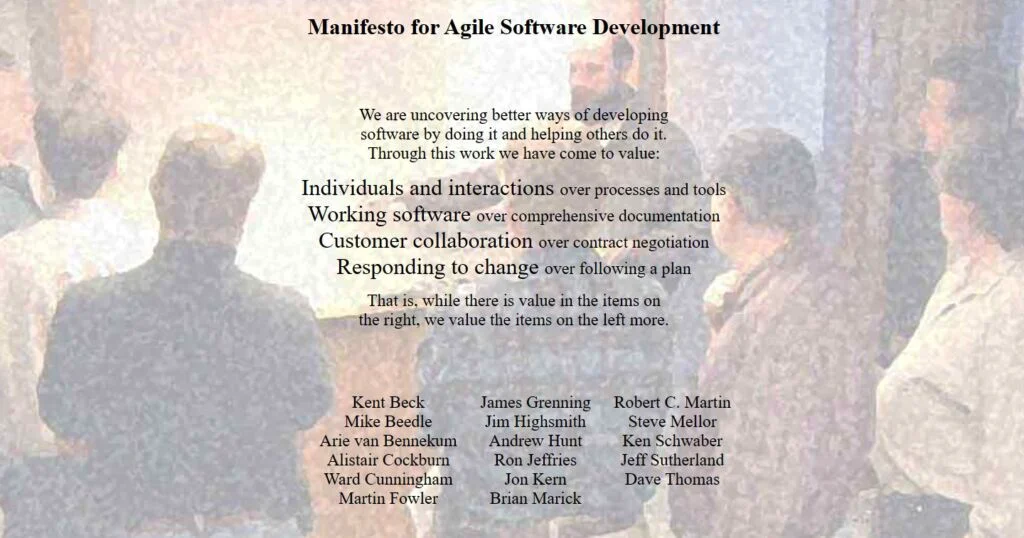
The Agile Manifesto is a concise document that outlines four values and twelve principles to guide software development teams. It was created in 2001 by a group of seventeen thought leaders who recognised the need for a more flexible approach to project management and delivery.
Its purpose? To help teams focus on collaboration, responding to change, and delivering value to customers quickly and efficiently.
The values at the heart of The Agile Manifesto are:
- Individuals and interactions over processes and tools
- Working software over comprehensive documentation
- Customer collaboration over contract negotiation
- Responding to change over following a plan
Each of these values emphasises adaptability and a human-centric approach to problem-solving.
Why Does The Agile Manifesto Matter?
Traditional project management methods often focus on rigid plans and hierarchies. These methods struggle to accommodate change, which is a constant in today’s fast-moving world. The Agile Manifesto addresses this by encouraging flexibility and continuous improvement.
Businesses that adopt Agile principles often experience:
- Faster delivery times: Teams focus on delivering usable increments rather than waiting for a “perfect” final product.
- Improved collaboration: Cross-functional teams work closely with stakeholders, fostering trust and shared ownership.
- Enhanced customer satisfaction: Regular feedback ensures that the product aligns with customer needs.
If you’re wondering whether Agile is right for your business, consider how often unexpected challenges derail your plans. Agile doesn’t just accommodate change; it thrives on it.
The Four Values of The Agile Manifesto: What They Mean for Your Business
Let’s dive deeper into the values and how they apply beyond software development.
1. Individuals and Interactions Over Processes and Tools
Processes and tools are essential, but they should never overshadow the people using them. Effective communication and teamwork drive success far more than rigid systems.
For example, I once worked with a client who insisted on using a complex project management tool that none of the team understood. It became a bottleneck instead of a solution. By focusing on direct communication instead, the team achieved their goals faster.
2. Working Software Over Comprehensive Documentation
Long-winded documents often become outdated before they’re useful. Agile emphasises delivering working solutions that provide real value to users.
This principle can be applied to any project. Imagine a marketing team launching an MVP (minimum viable product) campaign and refining it based on live feedback rather than waiting for perfect materials.
3. Customer Collaboration Over Contract Negotiation
Rigid contracts often lead to misaligned goals. Agile promotes ongoing communication with customers to ensure their evolving needs are met.
Startups, for instance, frequently pivot their strategies. Collaborating with customers allows them to fine-tune their offerings without being restricted by initial agreements.
4. Responding to Change Over Following a Plan
No matter how thorough your planning, things rarely go as expected. Agile encourages teams to adapt quickly rather than sticking to an outdated roadmap.
This value resonates with businesses that operate in dynamic markets, such as technology or retail, where trends shift rapidly.
The Twelve Principles: A Blueprint for Agile Success
The twelve principles expand on the four values and provide actionable guidelines. Let’s look at a few key principles:
- Deliver working software frequently, with a preference for shorter timescales.
Regular delivery keeps momentum and provides early value to customers. - Welcome changing requirements, even late in development.
Flexibility is vital to meeting customer needs. - Business and technical teams must work together daily.
Collaboration bridges gaps and ensures alignment.
For the full list of principles, visit Agile Alliance.
How Agile Impacts Real-World Businesses
Agile principles have revolutionised industries far beyond software development. Retailers, healthcare providers, and even government agencies have adopted Agile to improve their processes.
For example, Australian company Atlassian has built its success on Agile principles, creating tools like Jira to support Agile teams worldwide.
Similarly, I’ve worked with organisations that used Agile coaching to transform their workflows, achieving faster delivery times and improved employee morale. Learn more about how Agile coaching can help your business at White Internet Consulting.
FAQs: Answering Your Questions About The Agile Manifesto
What industries can benefit from The Agile Manifesto?
Agile is widely used in technology, but it can benefit any industry that values adaptability, including marketing, education, and manufacturing.
Do Agile principles apply to small businesses?
Absolutely. Small businesses can use Agile to stay nimble, adapt quickly, and deliver value efficiently.
How do I start implementing Agile in my organisation?
Begin with an Agile framework like Scrum or Kanban. Hiring an Agile coach can also help you navigate the transition.
Is Agile suitable for large organisations?
Yes, but large organisations may need to adapt Agile practices to fit their scale. Frameworks like SAFe are designed for this purpose.
Where can I learn more about The Agile Manifesto?
Visit the official Agile Alliance page for in-depth resources.
Final Thoughts
The Agile Manifesto is more than a set of values, it’s a mindset that enables teams to adapt, collaborate, and deliver value in a constantly changing environment.
Whether you’re a startup founder or managing a large organisation, embracing Agile can lead to faster results, happier customers, and stronger teams. To explore how Agile coaching can support your business, visit White Internet Consulting.
Make the shift to Agile today, and unlock the potential of your team.