Understanding the Mindset Behind Scrum
Scrum grew out of the Agile movement. In practice, it centres on short sprints, constant feedback, and team-driven improvement. It is grounded in a belief that people matter more than tools. I first worked with Scrum as a Chief Technology Officer in a budding software startup. We had a small group of developers and a few big ideas. At first, everything looked disorganised. We had late-night coding, random discussions, and zero structure. Adopting Scrum changed that. Standups gave us a short morning meeting to stay aligned. Planning sessions turned vague wishes into real tasks. Reviews gave us a sense of achievement. Retrospectives helped us learn what went wrong and what went right. It made the entire environment more predictable yet flexible.
I often ask clients to imagine they are coaches for a footy squad. You might have the best gear on the planet, but if the players have no idea what to do on the field, then all that shiny gear means nothing. Scrum helps define positions and plays. The aim is to organise the day, the week, and the bigger picture so that confusion melts away.
Many businesses struggle with the transition because they feel an Agile method might be too unstructured or chaotic. Actually, Scrum is not just random conversation. It lays out clear roles, events, and outputs. It does ask for honesty, consistent feedback, and a mindset of openness to improvement. It might feel strange at first if you come from a top-down project plan. Yet, once the gears start turning, you may see synergy and better communication.
If you want to dig deeper, consider reading Lean Software Development: An Agile Toolkit by Mary and Tom Poppendieck. That book offers a close look at how incremental improvements can empower a team. Scrum is often one of the prime examples of that philosophy in action.
Core Pillars of Scrum
Scrum is based on a few simple but powerful pillars. The first is transparency. That means sharing relevant information and progress openly. That might sound daunting for leaders who prefer to keep details under wraps. Yet, shining light on tasks and goals ensures the entire crew knows where the project stands.
Next is inspection. Teams use short cycles called sprints, and near the end of each, they show progress to stakeholders. Inspection is not about judgement. It is about seeing if the product meets the request and whether the team’s approach is heading in a solid direction.
Last is adaptation. Once you see what worked and what did not, you can tweak your direction. That might be adding new tasks or removing unneeded ones. This cycle repeats so the product never grows stale or wanders into irrelevance.
I recall a software development company that tried to skip these pillars by locking the plan in a spreadsheet, only reviewing it once every few months. They claimed it saved time, but it created a huge backlog of unknown problems. They discovered many mistakes late in the project. Switching to Scrum forced them to inspect their progress more frequently. They caught problems early and adapted. It was like turning on the lights in a dark warehouse.
Key Roles: Product Owner, Scrum Master, and the Development Team
A lot of teams fumble when they do not understand how the roles in Scrum support each other. First up is the Product Owner. This person speaks for the needs of the final users or the business. They own the product backlog, a sorted list of tasks to be done. They decide which items are most important and ensure they are well understood before the sprint starts.
Next is the Scrum Master. This role is all about guiding the team in Scrum practices. They are not a typical manager. They help keep ceremonies on track, remove obstacles that block the team’s work, and coach everyone to follow the core values. A skilled Scrum Master is like a stage director who keeps the show running smoothly but does not stand in the spotlight.
Then we have the Development Team. These are the folks who do the actual creation. They shape the product or service based on the backlog. In Scrum, the team is expected to organise itself. That means each member chooses tasks in a sprint planning session, and they all decide how to get them done. There is no strict chain of command saying you must do X or Y. The team has the power to plan their approach, as long as they deliver on the sprint goal.
One time, I saw a situation where the Product Owner was micro-managing every detail. That robbed the team of their freedom. Morale dipped, and sprints dragged on. We worked with him, clarifying that while it is wise to set priorities, the team must be free to decide how to implement those features. After a few sprints, the shift in morale was huge, and the velocity of completed tasks jumped up significantly.
For tips on how to structure these roles effectively, you can check out Agile Coaching services here. Having external guidance can help a team embrace the mindset required for Scrum.

Core Elements of a Sprint
Scrum thrives on sprints. Each sprint is a short, time-boxed phase where the team completes a subset of tasks taken from the product backlog. Sprints usually span two to four weeks. Some teams prefer one week to keep things moving quickly, but that can require very tight planning.
Sprint Planning: This event kicks off the sprint. The Product Owner explains the top backlog items, and the team discusses how to get them done. Together, they decide which items they can finish in the sprint.
Daily Scrum: This is a quick meeting, sometimes called the standup. People gather for about 15 minutes to talk about what they did yesterday, what they will do today, and any blockers. This keeps progress in plain view and helps the team adapt on the fly.
Sprint Review: Near the end of the sprint, the team showcases what they completed. Stakeholders give feedback. Everyone can see the result and compare it to the plan.
Sprint Retrospective: Right after the review, the team meets to talk about how the sprint went. This is not about pointing fingers. It is a chance to highlight what went well and what could be tweaked. Then the group decides on small improvements to apply in the next sprint.
I often compare these events to a regular fitness routine. If you plan your workouts, do a quick warm-up each day, check your progress weekly, and then reflect on what is working, you will be in better shape. Scrum is similar: consistent check-ins and short feedback loops lead to better results.
The Scrum Artifacts: Product Backlog, Sprint Backlog, and the Increment
Product Backlog: This is a sorted list of tasks, features, or anything that helps shape the product. The Product Owner updates and organises it often. Items near the top usually have more detail.
Sprint Backlog: Once the team decides which items to complete in the sprint, those items form the sprint backlog. It stays visible to everyone, often on a digital board like Jira. The goal is clarity. Anyone can see how progress is tracking.
Increment: At the end of each sprint, the team produces an increment. That increment is a working version of the product that meets the agreed definition of done. It might be a new feature or an improvement to a service. The point is it is usable and can be showcased.
When I served as a Tech Consultant for a local business, we created a digital platform for customers. The Product Backlog was huge at first. We started with one small portion, built it during a two-week sprint, and integrated it. Then we refined the backlog and repeated. It helped the client watch the product shape up in real time, rather than waiting months for one big release.

Barriers to Adopting Scrum
Many organisations claim they want to “go Agile” yet face hurdles. One big barrier is the shift from command-and-control thinking to shared ownership. In a classic structure, a boss might declare tasks with no input from the team. Scrum flips that. The group plans and commits to a set of items. Leaders guide but do not micromanage. Some leaders worry about losing their sense of power. Others worry the team might slack off if they are not policed. In reality, self-organisation often increases accountability.
Another barrier is the short cycle of inspection. Some managers feel uneasy about stakeholders seeing an unfinished product. They fear negative feedback. Scrum, though, thrives on short cycles. Early feedback means early course corrections. A friend of mine once tried to run a Scrum pilot in a marketing department. They were used to polished final outputs. Presenting partial drafts felt strange, but the real-time feedback saved them from going down the wrong path.
I remember a moment in my own journey when I was certain we would get hammered by the client for showing half-done features. Instead, the client gave valuable comments that helped us refine the user interface. If we had waited until the final launch, we would have had a less effective product.
Personal Anecdote: My Early Mistake with Time Estimation
In one of my early Scrum projects, I assigned tasks to developers without consulting them. I believed I was helping. It backfired. Many tasks took longer because my estimates were off. The developers felt no ownership. They saw me as an external task assigner. Sprints rolled by with missed deadlines. I learned a big lesson: let the team estimate and choose their tasks. They have a better idea of the effort required. Now, if a developer says a feature will take a whole sprint, I trust them or ask clarifying questions. That respect fosters higher motivation.
Getting Started with Scrum in Your Business
If you want to try Scrum, begin with these steps:
- Educate the Team
Spend time explaining the purpose behind Scrum. Share references like ScrumGuides.org. Let people see the entire process from product backlog through to retrospective. - Identify a Pilot Project
Pick a small or moderately sized project. Do not start with a massive mission-critical initiative. Let the team learn the ropes on something manageable. - Assign Clear Roles
Choose a Product Owner who understands the vision. Select a Scrum Master who loves coaching people. Define the Development Team with clear responsibilities. - Plan the First Sprint
Set a sprint length (like two weeks). During sprint planning, pick a few backlog items that the team can complete. They must agree on how to do it. - Hold Daily Check-Ins
Gather for a quick standup. Each person states progress, next steps, and any stumbling blocks. - Sprint Review and Retrospective
Share progress with stakeholders. Ask them for their thoughts. Then hold a retrospective with the team. Talk about what to change for next time.
These steps are not restricted to software. I have seen Scrum used in marketing, event planning, and even hardware design. The main ingredient is a willingness to break tasks into smaller increments and regularly get feedback.
Comparing Scrum to Other Agile Approaches
Scrum is not the only Agile framework. There is Kanban, Lean Startup, and others. Each has its style. Kanban, for instance, allows tasks to flow without strict time boxes. That might suit teams that want continuous flow rather than sprints. Scrum is typically more structured. It splits work into time frames, sets roles, and emphasises an increment at the end of each cycle.
Some folks blend parts of Scrum with elements of Kanban, leading to a hybrid known by some as Scrumban. That can be helpful if you want the discipline of sprints but prefer a continuous board for tracking tasks. The key is to understand why you are picking a method. If you want strong team collaboration, frequent reviews, and clear roles, Scrum can be a good fit.
When business owners ask me which method is best, I remind them to look at their team’s style, project demands, and environment. If you need a strong sense of group ownership and regular demos of working increments, Scrum is worth a shot.
Tools and Technology for Scrum
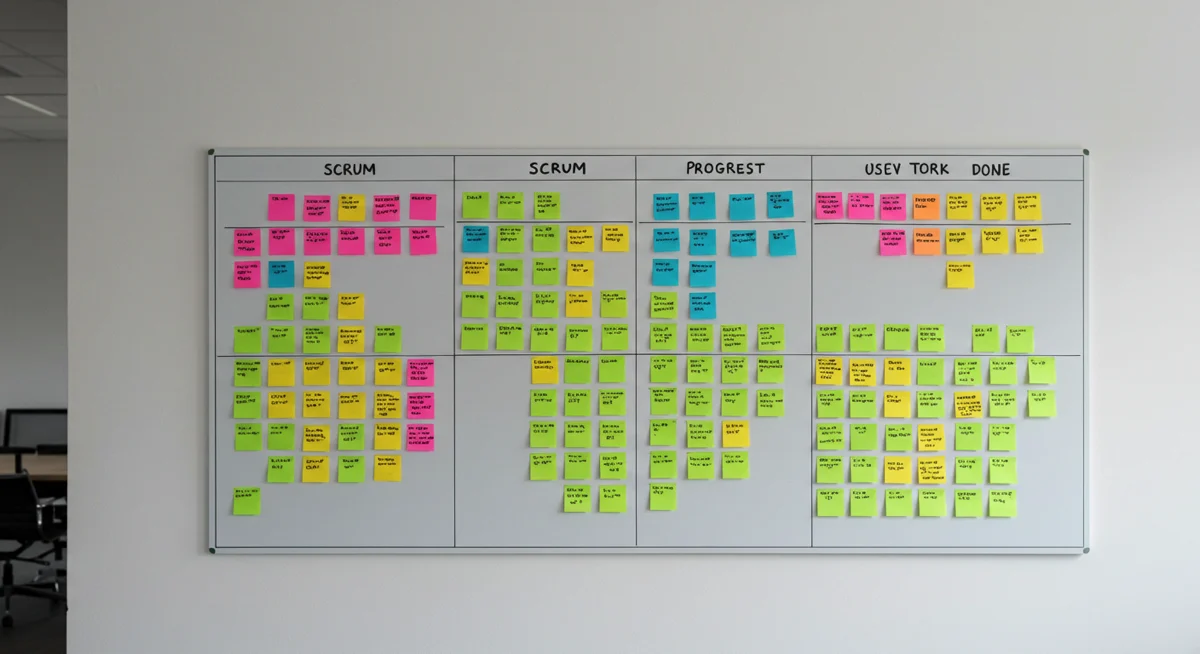
Many teams use digital project management tools to track tasks. Jira is a popular choice with boards, sprint tracking, and reporting. Others use Trello or Asana. The specific tool is less important than how you use it. If you prefer a physical board with sticky notes, that can also work. The critical point is to keep the sprint backlog visible.
One caution: fancy software alone will not fix a broken process. I once consulted for a startup that invested in an expensive project management package. They believed that would solve their time management issues. It did not. They still lacked clarity on backlog items and rarely held retrospectives. The tool just displayed the chaos more vividly. Once we introduced daily check-ins and gave them the chance to refine tasks, they finally began to see improvements. Tools are a helper, not a replacement for the mindset shift.
Measuring Progress and Value
Scrum teams often measure velocity, which is the amount of work completed in a sprint. Over time, a stable velocity can emerge, giving the team a sense of how much they can handle. While velocity is interesting, it is not the only measure. Consider actual business outcomes. Are customers satisfied? Are you releasing features that matter?
I once sat down with a retail business adopting Scrum. They measured success by how many tasks they cleared. Yet, their new e-commerce feature barely increased sales. We adjusted the backlog so we targeted user experience improvements rather than random tasks. The next sprint saw a bigger jump in conversions, which thrilled the owner. Velocity alone did not matter as much as the value delivered.
Scrum in Non-Software Settings
Some people think Scrum is just for coding projects, but that is not correct. Marketing teams can plan campaigns in sprints, with each sprint producing new creative assets or promotional push. Event planners can tackle tasks in short cycles, gather feedback on venue details, and adjust. I worked with a local cafe owner who used a Scrum-like method to redesign their menu and revamp the kitchen layout. They did short cycles, tested new menu items with customers, gathered feedback, and iterated. It removed guesswork and made the final menu more appealing to diners.
Real-World Success: Small Company, Big Impact
Let me share one more anecdote from my time as a CTO. We had a small dev team building a productivity app. Early sprints were chaotic, with changes to the backlog almost every day. We decided to improve how we handle change requests. The Product Owner groomed the backlog more frequently so the top items were always refined before sprint planning. We also introduced a policy: once a sprint starts, we try not to add new tasks unless it is an emergency. That forced better discipline. Within a few months, our velocity stabilised, and the quality soared. The business saw a big jump in user retention, and we even landed a partnership with a bigger player. Scrum was not a magic pill, but it was a steady drumbeat that aligned everyone’s efforts.
Linking Agile and Scrum to Broader Transformations
Scrum is a slice of the broader Agile idea. Some companies choose to expand this approach throughout their organisation. They might adopt an Agile framework for finance, HR, or sales. This can be more complex than introducing it to a single project team. Still, the payoff can be large if done thoughtfully. Regular inspection and adaptation can reveal issues in any department. Leaders can then fix them before they turn into big problems.
For a deeper dive, you can look at Agile Coaching resources if your team needs a mentor. Experienced coaches can sit with you, observe your environment, and guide you through the early sprints. That can be worth the investment, particularly if you want to shift your organisation’s mindset toward frequent improvement.
Common Misconceptions
- Scrum Is Only for Tech
Not true. Scrum applies to various fields like marketing, design, or even construction. - Scrum Is Chaos
That is a myth. It is a structured approach with roles, events, and artifacts that foster discipline. - Scrum Eliminates the Need for Managers
Managers might take on different responsibilities, but they do not vanish. They can shift to supporting the team in clearing obstacles and setting strategic goals. - Scrum Means No Documentation
Scrum does not forbid documentation. It simply encourages the right amount of documentation to avoid wasteful overhead. - Scrum Guarantees Success
No process is a silver bullet. Scrum helps teams adapt and learn faster, but it still requires effort, skill, and strong collaboration.
Tips for Leading a Scrum Transition
Set Clear Goals: Be sure everyone knows why you are moving toward Scrum. If people see it as more bureaucracy, they will resent it. Show the benefits.
Coach the Team: If you have a Scrum Master, let them run training sessions or hands-on demonstrations. Let them address doubts and coach team members who are unsure.
Start Small: Pilot with a single project or department before rolling Scrum across the entire business. That allows you to gather data on what works in your context.
Use Feedback Loops: Gather thoughts from the team and stakeholders. Make improvements with each sprint. That helps you refine your approach without massive risk.
Respect the Roles: Let the Product Owner set priorities but avoid micro-management. Let the team plan tasks. Let the Scrum Master advise on best practices. This balance of responsibilities keeps the process healthy.
I recall visiting a mid-sized finance firm that wanted to adopt Scrum quickly across every department. They forced it on everyone in a matter of weeks. The confusion was huge. We suggested they scale back and focus on a single pilot. They learned vital lessons in that pilot, such as how to manage the backlog in a finance context and how to run daily standups that do not interrupt client calls. Once they refined those practices, they expanded them more smoothly.
Advanced Scrum Topics
For those who already know the basics, you might look at scaled Scrum frameworks such as LeSS (Large Scale Scrum) or SAFe (Scaled Agile Framework). These aim to coordinate multiple Scrum teams working on one product. They add extra roles and events to keep large groups aligned. I have seen them used in bigger enterprises that want the speed of Scrum but need to handle bigger outputs. These advanced topics are a natural next step once a single Scrum team is working well.
The Intersection with Project Management
Scrum changes the classic project manager role. In a strict Scrum setup, the Scrum Master and Product Owner handle many tasks that a project manager might do. Yet, some organisations keep the project manager as a coordinator or stakeholder representative. Tools such as Jira help track progress. Project managers might watch the backlog and burn-down charts to see if the project is on pace.
If you are exploring ways to refine your project management approach, you might be interested in Project Management Services that include both Agile and more traditional practices. There is nothing wrong with mixing methods if it helps your unique context. Teams must find the right approach that fits their style and goals.
Handling Resistance to Change
Humans often resist change, especially if it threatens their comfort zone. Scrum might be met with scepticism. Some might say, “Why do we need all these daily standups?” or “We never did retrospectives before.” The best way to respond is to show them small wins. For instance, if a daily standup helps someone unblock a task, share that success. Over time, as people see direct gains in efficiency or quality, they become more open. Make it a safe space for them to voice concerns. Remind them that Scrum is not about blame but about continuous improvement.
Recommended Reading
Those new to Scrum or Agile might enjoy:
- The Phoenix Project by Gene Kim
A novel that illustrates how bottlenecks can cripple an organisation and how an Agile mindset can help. - The Pragmatic Programmer by Andrew Hunt
A classic on thinking about software development and continuous learning. - The Mythical Man Month by Fred Brooks
Explores why adding more people to a late project can slow things down further. - Lean Software Development: An Agile Toolkit by Mary and Tom Poppendieck
Offers key insights on waste reduction and quick feedback loops.
Reading a few of these can open your eyes to the broader picture of Agile and how Scrum fits within it.
Scrum Questions Answered: What You Need to Know
1) Does Scrum apply outside of software development?
Yes. Scrum can be used for a variety of projects, including marketing, event planning, and service-based tasks. The main idea is to organise work into short cycles and gather frequent feedback.
2) How long should a sprint last?
Sprints often last two weeks. Some teams pick one week for faster iteration, while others pick up to four weeks for larger tasks. Choose what feels right for your context, then fine-tune as you go.
3) Do we need a Scrum Master for a small team?
Having a Scrum Master is still beneficial, even for small teams. That person helps the crew follow Scrum principles, organises events, and addresses hurdles before they bog down progress.
4) Can Scrum be mixed with other methods?
Yes. Some organisations combine Kanban and Scrum, sometimes called Scrumban. Others mix classic project management with Scrum. The goal is to find what works for your group while keeping the essence of short cycles and frequent inspections.
5) Is Scrum only for Agile software projects?
Scrum is popular in Agile software projects, but it fits any domain that benefits from transparency, short feedback loops, and frequent adaptation. The key is an open-minded team committed to improvement.
Final Thoughts
Scrum is a people-first approach to managing work. It focuses on short cycles, transparent backlog items, and continuous refinement. It asks leaders to trust teams and invites teams to organise themselves. I have seen it bring clarity and speed to projects in tech, marketing, hospitality, and many other fields. It is not a magic wand, and it requires discipline. But with consistent practice, it can help your business tackle projects with greater confidence. Scrum.